What is your love song? is a simple question taking over social media right now. The phrase asks which song represents love in your life, not a playlist, but the track that makes you feel something real.
BTS-themed visuals flood X and Instagram, featuring fan-made posters styled like concert tickets. Each design showcases a different member, pulling fans into the conversation.

New billboards spotted in Times Square, New York, and across London made the trend explode offline in early February 2026. The massive ads use BTS-style branding, making fans wonder if something official is coming.
Music taps into emotion instantly. Fandom-driven curiosity pushes the trend forward. Screenshots and quote posts gain traction daily. The question feels personal but stays low-effort. That’s exactly why it’s spreading.
Why “What Is Your Love Song?” Is Suddenly Everywhere
Fan-led posts on X sparked this in late January 2026. The format is dead simple: ask the question, add a visual, wait for replies. High engagement comes from how easy it is; just drop a song title, and you’re in.
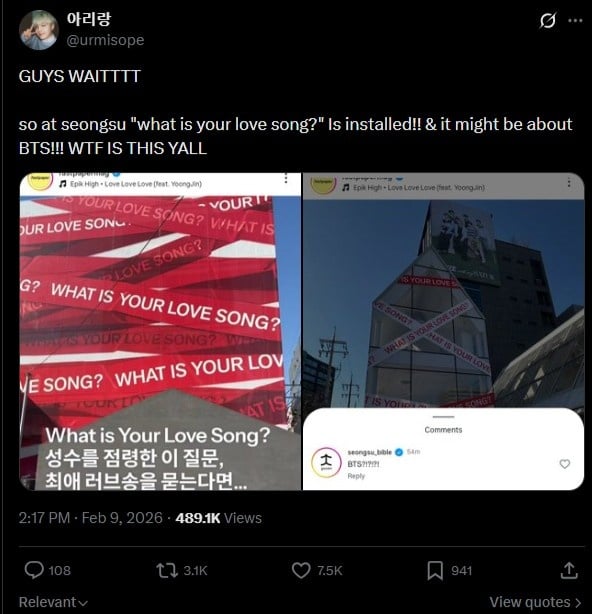
The emotional factor hooks people fast. Music is universal. Everyone has that one track. Participation requires almost zero effort, so replies and reposts pile up. Pure relatability keeps the momentum going.
How BTS Fans and Visuals Fueled the Trend
BTS branding dominates the visuals. Fan-created designs mimic Proof album art and concert posters. “Ticket” or “poster” style images reference individual members, RM, Jin, Suga, J-Hope, Jimin, V, and Jungkook.
The aesthetic feels official even though it’s not. BTS’s discography is packed with love-themed tracks like “Boy With Luv,” “Euphoria,” and “Serendipity.” The cultural association writes itself.
Here’s the kicker: no official BTS release ties to this phrase. It’s purely fan-driven creativity borrowing the group’s emotional language.
What People Mean When They Ask “What Is Your Love Song?”
This isn’t about literal playlists. It’s an emotional connection. When someone asks this, they want the track representing comfort, memory, or self-growth in your life. Love gets interpreted broadly; heartbreak, joy, and nostalgia all count.
The question also humanizes AI, artists, and brands. Fans ask ChatGPT to see if it can simulate that emotional response convincingly. Companies run Twitter campaigns with it.
The phrase works because it’s low-effort but deeply relatable. No answer is wrong. Everyone feels included.
Spotify’s Role in Amplifying the Love Song Conversation
Spotify playlists titled “Your Love Song” gained serious traction in early February 2026. One viral example is a BTS fan-curated collection: this album link.
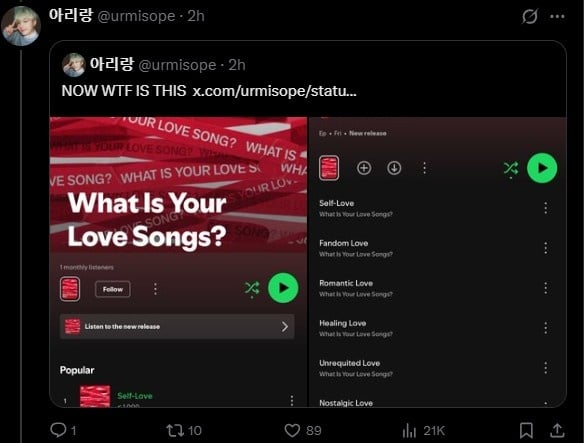
Users link answers directly to Spotify tracks now. Abstract emotion becomes something playable. Music discovery ties to personal storytelling this way. Streaming platforms turn into emotional archives. Spotify’s algorithm catches on, pushing more “love song” content to users.
Why This Question Is Resonating Right Now
Fandom culture thrives on emotional prompts. BTS fans, especially after the group’s 2025 post-enlistment return and packed 2026 tour, are re-energized.
The question tests human vs. machine curiosity, too. People ask AI bots to see if they give “real” answers.
Music expresses identity without oversharing. The trend is shareable, timeless, and works on every platform. That’s why it’s sticking around.