So you want to start a K-pop blog?
Look, I get it. You’re deep in the fandom. You’ve got opinions about every comeback, you know group members’ birthdays by heart, and you’ve probably corrected someone on Twitter (X) about an idol’s actual height at least once.
And at some point, you thought: “Why not turn all this into a blog?”
That’s exactly how Kpopbeen.com started. In October 2025, we launched a K-pop blog from scratch. No big team. No huge budget. Just a genuine love for K-pop and some blogging experience from running a previous music site.
Within 10 months? 298K clicks, 35.8 million impressions, and an average position of 5.1 on Google Search.
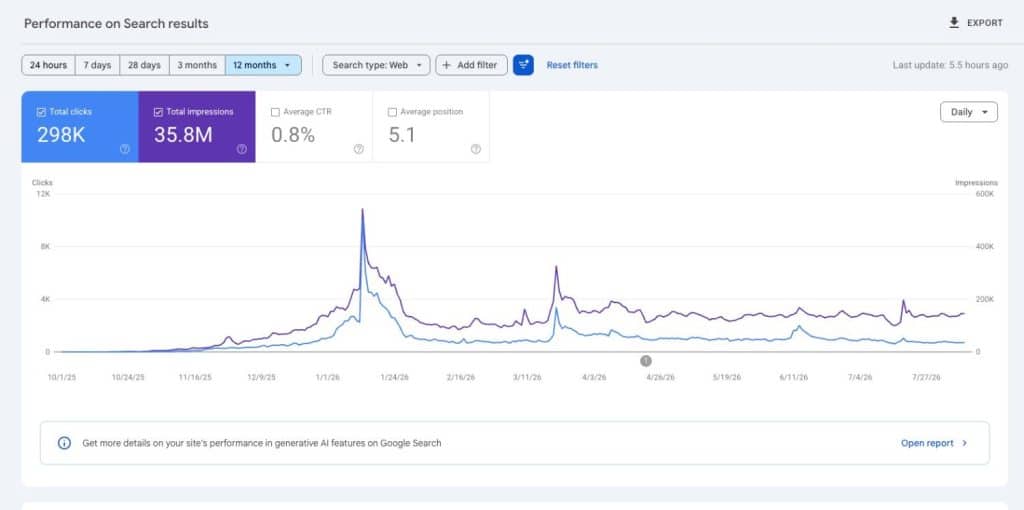
Not bad for a blog that started with zero readers, right?
But here’s the thing. Those numbers didn’t happen by accident. And this guide isn’t going to be one of those generic “pick a niche and start writing” articles. This is everything we actually did, the mistakes we made, and what we’d do differently if we were starting over today.
Whether you want to blog about BTS, cover every HYBE comeback, rank the best B-sides of the year, or build a full-blown K-pop publication, this guide covers it all.
Let’s get into it.
How to Start a K-pop Blog (Step By Step)
Whatever you are going to read here comes from my experience, not just theory. I’m Eram. I run Kpopbeen, and I have 6+ years of experience in content-led SEO. Over the years, I’ve started multiple blogs, and this is just one of them.
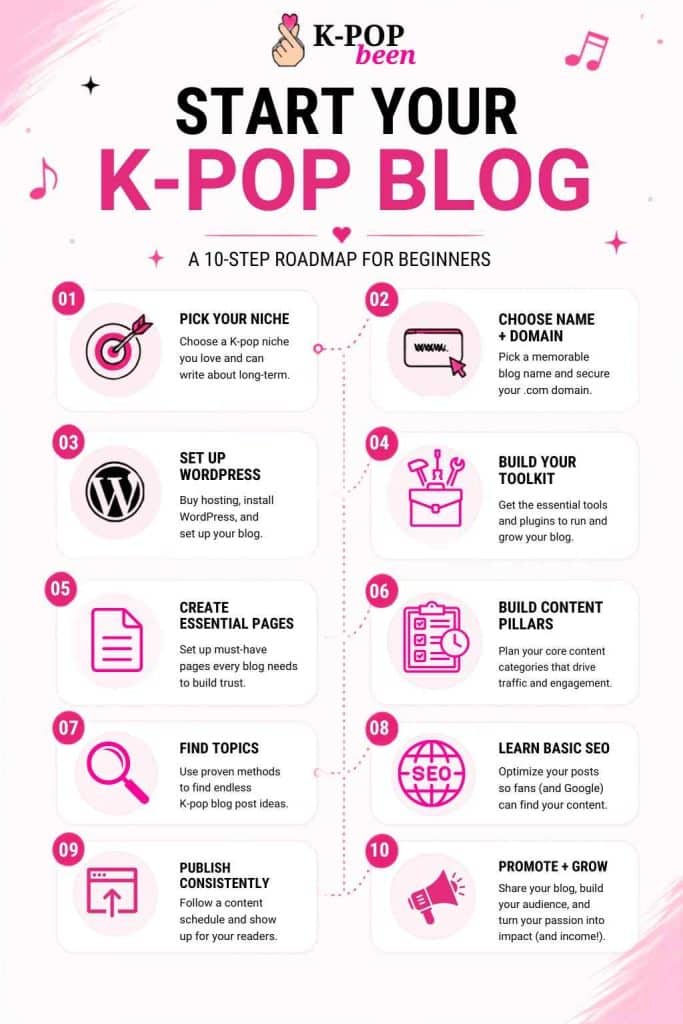
Here are a few tips that will genuinely help you.
1. Choose Your K-Pop Blog Niche
K-pop is massive. The global K-pop market was valued at approximately $9.3 billion in 2023, and it’s only getting bigger.
That’s exciting, but it also means there’s a LOT of content already out there. So if you try to cover everything (news, reviews, profiles, fashion, dance, merch, fan fiction), you’ll spread yourself too thin before you even get started.
Here are some popular K-pop blog niches you can pick from:
- K-pop news and updates (comeback announcements, tour dates, agency news)
- Idol and group profiles (member details, discographies, fun facts)
- Comebacks and album reviews (track-by-track breakdowns, ratings, comparisons)
- K-pop rankings and lists (best dancers, best vocalists, richest idols, top B-sides)
- K-pop fashion and beauty (idol airport looks, makeup tutorials, style breakdowns)
- Fandom guides (lightstick guides, fan chant guides, concert tips for newbies)
- K-pop statistics and data (album sales numbers, streaming records, chart history)
- Opinion and commentary (hot takes, industry analysis, fandom culture discussions)
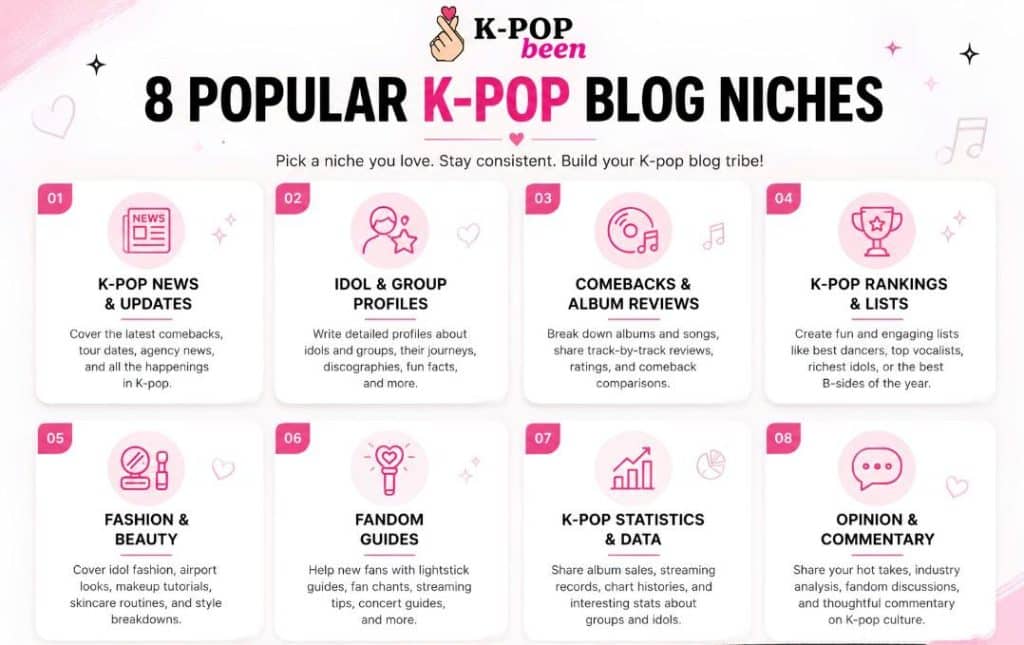
When we started Kpopbeen, we didn’t try to become the next Soompi or Allkpop overnight. We focused on idol profiles and rankings first, because those are topics fans are constantly searching for, and they stay relevant for months (unlike news, which dies in 24 hours).
Here’s my honest advice: Start with 1 to 2 core areas. You can always expand later. But trying to cover the entire K-pop industry from day one? That’s a fast track to burnout.
Pick something you genuinely enjoy writing about. Because if you’re a vocal analysis nerd, forcing yourself to write about fashion trends is going to show in the writing. And K-pop fans can tell.
2. Pick a Memorable Name and Domain
Your blog name is the first thing people see. It should be easy to remember, easy to spell, and ideally give some hint that it’s about K-pop or music.
Quick checklist before you finalize domain name:
✅ Is it under 15 characters?
✅ Can someone spell it after hearing it once?
✅ Does it hint at K-pop or music?
✅ Is the .com domain available?
✅ Are the social media usernames available?
If you’re checking all those boxes, you’ve got a solid name.
A few tips that worked for us:
- Keep it short.
One or two words is ideal. “Kpopbeen” is quick, catchy, and instantly tells you what the site is about. It actually came from our previous music blog called Simplebeen, which hit over 50 million impressions in just 7 to 8 months. When we decided to start a dedicated K-pop site, the “been” part of the name carried over naturally. - Make it easy to spell.
If someone hears your blog name in a conversation or on a podcast, they should be able to type it into a browser without guessing. Avoid special characters, hyphens, or numbers that people won’t remember. - Avoid names too similar to established publications.
You don’t want to be confused with Soompi, Koreaboo, or Allkpop. That confusion won’t help you. It’ll just make you look like a copycat. - Check domain availability.
Before you fall in love with a name, head over to a domain registrar and check if the .com is available. The .com extension still carries the most trust with readers and search engines. You can check Namecheap or GoDaddy. - Check social media handles too.
Your blog name should ideally be available on Instagram, X (Twitter), TikTok, and Pinterest. Consistent branding across platforms matters more than people think. - Think about future expansion.
A name like “BTSonly.com” locks you into one group. What happens when you want to cover SEVENTEEN or aespa? Choose something broad enough that you won’t outgrow it.
3. Set Up Your Website
This part sounds intimidating if you’ve never done it before, but honestly? Setting up a blog in 2026 is easier than learning the choreography to any SEVENTEEN song.
Here’s what you need:
Choose a Blogging Platform
WordPress.org (the self-hosted version) is what we use at Kpopbeen, and it’s what we recommend for anyone who’s serious about blogging.
Why? Because WordPress powers over 43% of all websites on the internet, according to W3Techs. It gives you full control over your site’s design, SEO settings, and monetization. You own everything.
You could use platforms like Wix, Squarespace, or Blogger. But those come with limitations, especially when you want to customize your SEO, add specific plugins, or eventually run ads and affiliate links.
If you’re building this as more than a hobby, WordPress is the way to go.
Select a Hosting Provider
Your hosting provider is basically the company that stores your website’s files and makes sure it loads when someone visits. Think of it as renting space on the internet.
We went with Hostinger for Kpopbeen. The main reasons:
- Affordable for beginners. WordPress hosting plans start at around $2.99/month when you commit to a longer-term plan.
- One-click WordPress installation. You don’t need to be a tech wizard to get started.
- Good speed and uptime. Your blog needs to load fast, especially when a BTS announcement drops, and thousands of fans are searching simultaneously.
Other popular options include Bluehost, SiteGround, and Cloudways. But for a new K-pop blog on a budget, Hostinger does the job well.
Buy Your Domain
Most hosting providers (including Hostinger) let you buy your domain during the signup process. A .com domain typically costs around $10 to $15 per year.
Buy it. Don’t use a free subdomain like “yourblog.wordpress.com.” It looks unprofessional and makes it harder to build authority with Google. Go on NameCheap or GoDaddy to see domains.
Choose a Mobile-Friendly Theme
Your theme controls how your blog looks. And here’s an important stat: the majority of K-pop fans are on their phones. If your site looks terrible on mobile, they’ll leave before they even read your first paragraph.
We use the Astra theme at Kpopbeen. It’s free, lightweight, and has over 1.6 million active installations on WordPress. It loads fast, works with most page builders, and is SEO-friendly out of the box.
Other solid free options include Kadence, GeneratePress, and Flavor. But Astra has been reliable for us from day one.
Set Up Navigation and Categories
Keep it clean and simple. A visitor should be able to find what they’re looking for in two clicks or less.
For a K-pop blog, your main categories might look something like:
- Groups / Idols
- Comebacks / Reviews
- Rankings / Lists
- News
- Guides
You can always add more later, but starting with 4 to 6 clear categories keeps things organized.
Create a Simple Visual Identity
You don’t need to hire a designer right away. But you should have:
- A clean logo (even a text-based one is fine to start)
- Consistent colors (pick 2 to 3 main colors and stick with them)
- A readable font (nothing too fancy; your readers are here for the content)
Your site doesn’t need to look like a million bucks on day one. It needs to look clean and load fast. You can polish the design as you grow.
4. Set Up Your K-Pop Blogging Toolkit
Running a blog isn’t just about writing and hitting publish. You need tools for editing, keyword research, image creation, social media, analytics, and fact-checking.
Here’s what we actually use at Kpopbeen (not a theoretical list, but the real tools in our daily workflow).
Writing and Editing Tools
Grammarly has been a non-negotiable part of our workflow for years. Literally six years at this point, since way before Kpopbeen even existed.
When you’re publishing regularly, proofreading every article manually is exhausting. And when you’re writing about K-pop specifically, there are so many idol names, group names, Korean terms, song titles, and romanized words that are incredibly easy to mistype. One wrong letter in a member’s name, and fans will let you know in the comments.
Grammarly catches grammar mistakes, spelling errors, punctuation issues, and readability problems before you hit publish. It’s saved us from embarrassing typos more times than we can count.
The free version handles the basics, but the premium version is worth it if you’re publishing multiple times a week. It catches clarity issues, tone inconsistencies, and even suggests better word choices.
If you’re planning to use Grammarly’s premium features, Grammarly offers discount of 20% on premium plans. Available for everyone, this Grammarly discount helps you get the annual plan at only $9.60/month. The regular price is reasonable, but a discount makes it even better.
Next, Google Docs is our go-to for drafting. Nothing fancy, but it’s free, it auto-saves, and you can access your drafts from anywhere.
On the other hand, Claude (AI assistant) helps us with research, outlining, and brainstorming. But here’s the key: we use AI as an assistant, not a replacement. More on this later when we talk about common mistakes.
Other Useful Tools
Here are a few more tools that are worth having in your toolkit:
| Tool | What It Does | Free or Paid |
|---|---|---|
| Google Trends | Shows what K-pop topics are trending right now | Free |
| Google Search Console | Tracks how your blog performs in Google search | Free |
| Ahrefs Chrome Extension | Quick keyword difficulty and search volume checks | Free (basic) |
| Canva | Create graphics, featured images, and social media posts | Free (with paid upgrades) |
| Google Analytics | Tracks your blog’s traffic, popular pages, and audience data | Free |
| Buffer or Later | Schedule social media posts in advance | Free (basic plans) |
You don’t need to sign up for everything on day one. Start with Grammarly, Google Docs, and Google Search Console. Add the rest as your blog grows, and you understand what you actually need.
One thing we wish we did earlier at Kpopbeen: Use the Ahrefs free Chrome extension from the beginning. Even the free version gives you a quick snapshot of keyword difficulty and search volume right in the search results. It would have saved us some time in the early weeks.
5. Create the Essential Pages
Before you publish your first article, set up these foundational pages. They build trust with your readers and keep you on the right side of legal requirements.
- About Page. Tell your readers who you are and why you started this blog. K-pop fans connect with real people. Share your bias, your favorite group, and how you fell into the fandom. This is a fan site. Let that show.
- Contact Page. Give people a way to reach you. A simple contact form or a dedicated email address works fine. You’ll be surprised how quickly PR agencies and brands start reaching out once your traffic grows.
- Privacy Policy. This is legally required in most countries if you use cookies, analytics, or ads on your site. Free generators like TermsFeed can create one for you in minutes.
- Terms & Conditions. Outlines the rules for using your website. Another legal basic that protects you.
- Editorial Policy. This one is optional, but it matters for credibility. Explain how you fact-check information, how you choose topics, and your commitment to accuracy. In K-pop blogging, where misinformation spreads fast, having an editorial policy tells readers (and Google) that you take accuracy seriously.
- Disclaimer. If you plan to use affiliate links (like a Grammarly discount link or hosting referral), disclose it. Transparency builds trust, and it’s required by the FTC in the United States.
Why does all this matter? Because K-pop fans are passionate, informed, and protective of their idols. If your blog looks sketchy or untrustworthy, they won’t come back. Transparency is not just good ethics. It’s good business.
6. Build Your K-Pop Content Strategy
Random publishing doesn’t work. Trust us on this one.
One of the biggest mistakes we made early at Kpopbeen was not building proper content clusters. We were writing articles without a clear plan, jumping between topics without connecting them. It was messy, and it hurt our growth.
A content strategy gives your blog structure. It tells Google (and your readers) what your site is actually about.
Here’s a simple content pillar framework you can follow:
Content Pillar 1: K-Pop News
Breaking news, comeback announcements, tour dates, agency updates.
Examples: “BTS Announces 2026 World Tour Dates,” “HYBE’s New Girl Group Debut: Everything We Know”
News is great for traffic spikes. When BTS announced their tour in early 2026, Kpopbeen already had enough authority to rank quickly, and we published immediately. That single timing decision caused our biggest traffic spike ever.
But news has a short shelf life. It brings people in, but it doesn’t keep them coming back months later.
Content Pillar 2: Idol & Group Profiles
Detailed profiles covering members, positions, ages, heights, birthdays, fun facts, and discography.
Examples: “BTS Members: Complete Profile, Ages, and Fun Facts,” “All SEVENTEEN Members: Positions, Birthdays, and More”
This is evergreen content, which means people search for it constantly, not just when there’s news. Profiles are the backbone of most successful K-pop blogs.
Content Pillar 3: Rankings & Lists
Fans love lists. “Top 10 best dancers in K-pop.” “Richest K-pop idols.” “Best K-pop albums of 2026.” These articles get shared, debated, and bookmarked.
Examples: “Top 15 Best Female Vocalists in K-Pop (Ranked),” “10 K-Pop Songs That Changed the Industry”
Rankings drive tons of engagement because fans feel strongly about their favorites. They comment, share, and sometimes argue. All of which is great for your blog.
Content Pillar 4: Reviews & Commentary
Album reviews, comeback reviews, music video breakdowns, and industry opinions.
Examples: “Review: aespa’s New Album Track by Track,” “Why 4th Gen K-Pop Groups Are Changing the Concert Experience”
This is where your personality as a fan really shines. Reviews let you share genuine opinions, and readers appreciate it when those opinions are well-reasoned and backed by examples.
Content Pillar 5: Fan Guides
Practical guides that help fans navigate the K-pop world.
Examples: “How to Buy K-Pop Albums Online (Beginner’s Guide),” “Complete Guide to K-Pop Lightsticks,” “What to Expect at Your First K-Pop Concert”
Guides are some of the most valuable content you can create. They solve real problems, and fans bookmark and share them regularly.
Here’s how to balance these pillars: Don’t spend all your time on one type. A healthy mix of evergreen profiles, trending news, and helpful guides keeps your blog balanced and gives Google clear signals about what you cover.
7. Find K-Pop Topics People Actually Want to Read
This is where a lot of new bloggers get it wrong. They write about what they want to write about, without checking if anyone is actually searching for it.
At Kpopbeen, we did something different from day one. Instead of jumping straight to keyword tools like Ahrefs or Semrush (which can be overwhelming and expensive for beginners), we went to Reddit and Quora first.
Why? Because those platforms show you what real fans are actually asking.
We looked for questions with the most answers underneath. The logic was simple: if a question has 50+ answers on Reddit, clearly a lot of people care about this topic. That means there’s potential for a blog article.
Here are the best free ways to find K-pop topics:
- Google Autocomplete. Start typing a K-pop-related query in Google and see what suggestions come up. Those suggestions are based on what people actually search for.
- People Also Ask / Related Searches. After you search for something on Google, scroll down to see “People Also Ask” and “Related Searches.” These are goldmines for content ideas.
- Google Trends. Type in a group name or topic and see if interest is rising, falling, or spiking. This is especially useful around comeback seasons and award shows.
- YouTube Search Suggestions. YouTube’s search bar works similarly to Google’s autocomplete. Since K-pop is a heavily visual genre, YouTube suggestions often reveal topics that do well as blog posts too.
- Reddit and Fan Forums. Subreddits like r/kpop, r/kpophelp, and group-specific subreddits are filled with questions and discussions. These are your topic ideas, straight from the fans.
- Competitor Research. Look at what other K-pop blogs are writing about. Not to copy, but to see what topics are getting engagement and where there might be gaps you can fill.
- Upcoming Comebacks and Events. MAMA Awards, MMA, Melon Music Awards, group comebacks, world tours. These events create waves of searches. If you can publish content right before or during these events, you’ll catch the traffic.
8. Understand Copyright Before Publishing K-Pop Content
This is the section a lot of new K-pop bloggers skip, and it eventually causes problems.
K-pop content exists in a tricky copyright space. Photos of idols, music video screenshots, album artwork, and logos are all owned by someone (usually the entertainment company). You can’t just grab images from Google and use them on your blog.
Here’s what you need to know:
- Don’t copy articles from other sites. This seems obvious, but it happens all the time. Rewriting someone else’s article in slightly different words is still plagiarism, and Google will penalize you for it.
- Don’t reproduce other publications’ wording. Even if you’re covering the same news, write it in your own voice with your own angle. Your blog’s personality is your biggest asset.
- Be careful with photos. Entertainment companies like HYBE, SM, JYP, and YG own the rights to their artists’ images. Some agencies are more lenient about fan sites using promotional photos, but others are strict.
- Understand image licensing. Options for getting legal images include official press photos released by agencies (usually OK for editorial use), photos from Wikimedia Commons or other Creative Commons sources, original graphics you create yourself using tools like Canva, and embedded social media posts (embedding is generally safer than downloading and re-uploading).
- Don’t assume Google Images means free to use. Just because an image shows up in a Google search doesn’t mean it’s free. Many of those images are copyrighted.
- Credit your sources. Always credit where information and images come from. It’s respectful, it’s professional, and it protects you legally.
- Understand the limitations of fair use. Fair use (or fair dealing, depending on your country) allows limited use of copyrighted material for commentary, criticism, and education. But it’s not a blanket permission to use whatever you want. When in doubt, err on the side of caution.
The safest approach? Create your own visuals as much as possible, use official press materials when available, and always give credit.
9. Learn Basic SEO for Your K-Pop Blog
SEO (Search Engine Optimization) is how your blog shows up in Google when someone searches for something like “BTS members age” or “best K-pop albums 2026.”
You don’t need to become an SEO expert overnight. But understanding the basics will make a massive difference in your traffic.
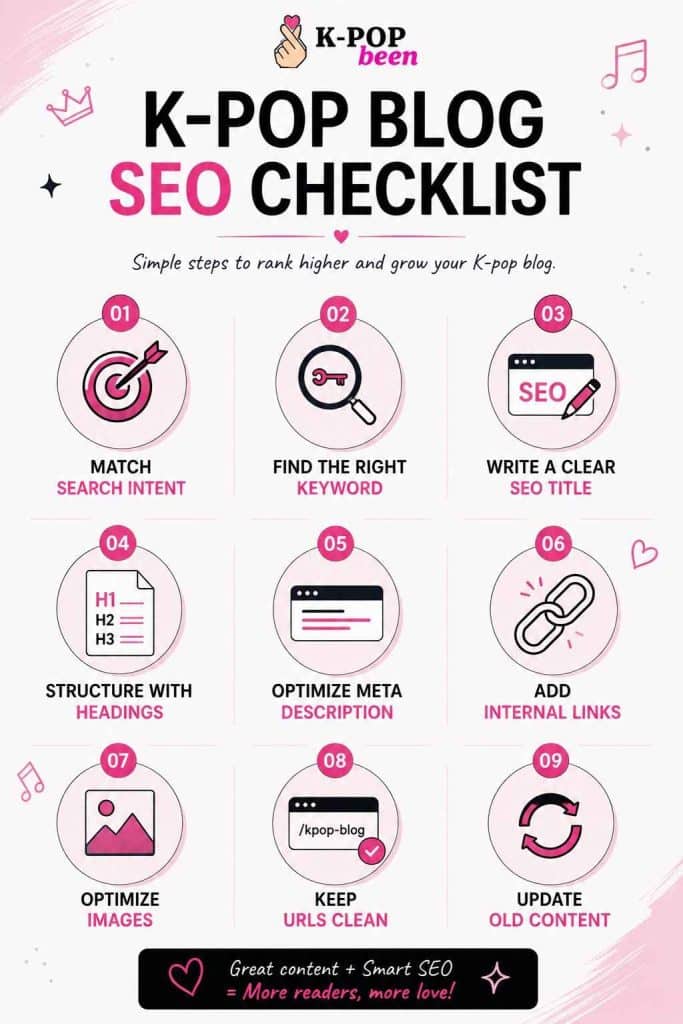
Here’s what matters most for a K-pop blog:
Search Intent
Before you write an article, ask yourself: What does the person searching for this actually want to find?
If someone searches “BTS members,” they want a list of members with basic info. They don’t want a 3,000-word essay about the history of BTS. Match the content to what the searcher is looking for.
Keyword Research
Keywords are the words and phrases people type into Google. You want to write articles that target keywords people are actually searching for.
Free tools to get started: Google Autocomplete (type and see suggestions), Google Trends (see what’s trending), Ahrefs Free Chrome Extension (check keyword difficulty), and Google Search Console (see what queries bring people to your site).
At Kpopbeen, we relied heavily on Google autocomplete and Reddit research in the early months. You don’t need a $100/month keyword tool to find good topics. Free tools and common sense go a long way.
SEO Titles
Your title is the first thing people see in search results. Make it clear, include your main keyword, and make it compelling enough to click.
Good: “BTS Members: Ages, Heights, Positions & Fun Facts (2026)”
Not great: “Everything About BTS You Need to Know Right Now!”
The first one tells Google exactly what the article is about. The second one is vague and could be about anything.
Headings (H2, H3, H4)
Use headings to break your content into clear sections. Each heading should describe what the following section covers. This helps both readers and search engines understand your article structure.
Meta Descriptions
This is the short description that shows under your title in search results. Keep it under 160 characters, include your keyword, and make it enticing. Think of it as a mini-ad for your article.
Internal Links
Link between your own articles. If you write a “BTS Members” profile and also have a “BTS Discography” article, link them together. Internal linking helps Google discover more of your content and keeps readers on your site longer.
Image Optimization
Every image on your blog should have a descriptive file name (not “IMG_4562.jpg”) and alt text that describes what the image shows. This helps with image search and accessibility.
Clean URLs
Keep your URLs short and descriptive. Use “kpopbeen.com/bts-members” instead of “kpopbeen.com/2026/01/15/everything-you-need-to-know-about-bts-members-complete-guide.”
Update Old Articles
This is one of the most underrated SEO strategies. When new information comes out (a member’s age changes, an album is released, an award is won), update your existing articles instead of writing new ones. Google loves fresh content, and updating keeps your articles ranking.
A Practical K-Pop SEO Example
Let’s say you want to write about SEVENTEEN members.
- Keyword: “SEVENTEEN members” (this is what people search)
- Title: “SEVENTEEN Members: Complete Profile, Ages, Heights & Positions (2026)”
- URL: /seventeen-members
- Meta description: “Meet all 13 SEVENTEEN members with updated ages, heights, positions, birthdays, and fun facts. Complete 2026 profile guide.”
- Headings: One H2 for each member, with H3s for details like “Early Life,” “Position,” “Fun Facts”
- Internal links: Link to “Best SEVENTEEN Albums,” “SEVENTEEN Discography,” and other related posts
- Images: Alt text like “S.Coups SEVENTEEN leader photo 2026”
That’s basic SEO. It’s not complicated, but it makes a massive difference.
10. Make Your Articles Better Than Existing Results
Here’s the hard truth: over 90% of pages get zero organic traffic from Google, according to Ahrefs. There are over 600 million blogs on the internet right now, publishing around 7.5 million posts every single day.
So how do you stand out?
By making your content genuinely better than what’s already ranking. Not just different. Better.
Here’s how:
- Include original research and updated data.
If every article about “richest K-pop idols” uses the same outdated numbers, find fresher sources. Check recent Forbes lists, agency financial reports, and news articles for updated figures. Then cite your sources. - Add tables and comparison charts.
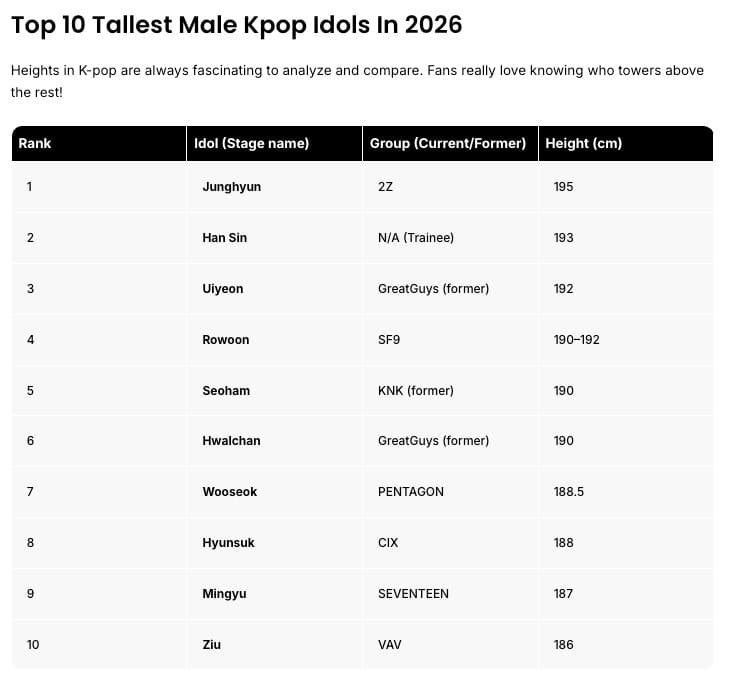
K-pop fans love organized data. A table comparing all BTS members’ ages, heights, and positions is more useful than five paragraphs of text saying the same thing.
- Create timelines.
For group profiles, discography posts, or career retrospectives, a visual timeline of key events makes the article more useful and easier to skim. - Write better explanations.
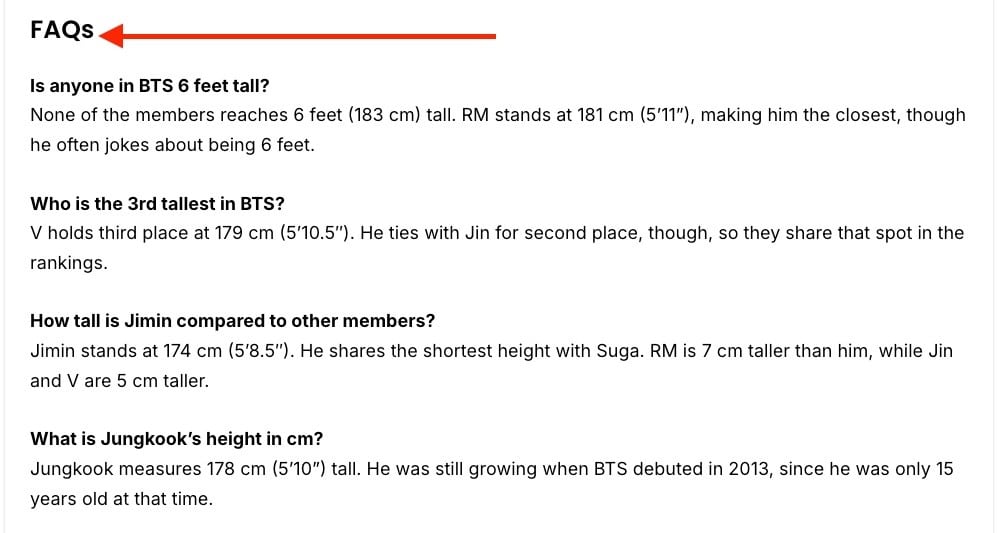
If existing articles just list facts, add context. Why does a particular position matter? How does a group’s formation story connect to their music? Give readers something they can’t get from a fan wiki. - Include FAQs.
Scroll to the “People Also Ask” section on Google for your topic. Answer those questions at the end of your article. This helps with SEO and genuinely helps readers.
- Add first-hand commentary.
You’re a fan. Use that. Share your perspective on why a particular album stands out, which B-side is criminally underrated, or why a certain performance was a turning point for a group. That personal touch is what separates a good blog from a forgettable one.
At Kpopbeen, we were genuinely surprised that even competitive keywords performed when we put in the effort to make our articles better than existing results. It’s not always about finding low-competition keywords. Sometimes it’s about writing the best version of a topic that already exists.
On the flip side, we also tried heavily data-focused content (just numbers, charts, and stats without much personality). It flopped. Fans want data and heart. Remember that.
11. Create a Realistic Publishing Schedule
Consistency beats volume. Every time.
When Kpopbeen first launched, we published one article per day. That was ambitious, and honestly, it wasn’t sustainable long-term without sacrificing quality.
Now we publish four articles per week, and each one is more thorough, better researched, and more optimized than what we were putting out in the early days.
Here’s a realistic schedule for a new K-pop blogger:
Weeks 1 to 4: Aim for 3 to 4 articles per week. This builds up a base of content so your blog doesn’t look empty.
Month 2 onward: Settle into 2 to 3 quality articles per week. Focus on making each one genuinely useful.
Every month: Update 2 to 3 existing articles with fresh information. This matters more than people realize.
A suggested weekly breakdown might look like this:
| Day | Content Type |
|---|---|
| Monday | Evergreen article (profile, guide, or ranking) |
| Wednesday | Trending topic or news coverage |
| Friday | Review, list, or opinion piece |
| Weekend | Update 1 to 2 older articles + social media promotion |
The keyword here is realistic. If you can only publish twice a week with your current schedule, that’s fine. Two great articles per week will outperform seven mediocre ones.
Don’t burn yourself out trying to match the output of sites with full editorial teams. You’re one person (or a small team). Work at a pace you can maintain for months, not just weeks.
12. Promote Your K-Pop Blog
Publishing a great article and hoping people find it is not a strategy. You need to actively promote your content, especially in the early months when Google hasn’t started ranking your site yet.
Here’s how to promote a K-pop blog on each major platform:
Most bloggers underestimate Pinterest for K-pop content, and that’s a mistake. Pinterest works like a visual search engine, and fans constantly search for idol photos, aesthetic boards, and K-pop content.
You can check our Pinterest profile here. I started posting on Pinterest very actively just 30 days ago, and this is how the dashboard is looking right now.
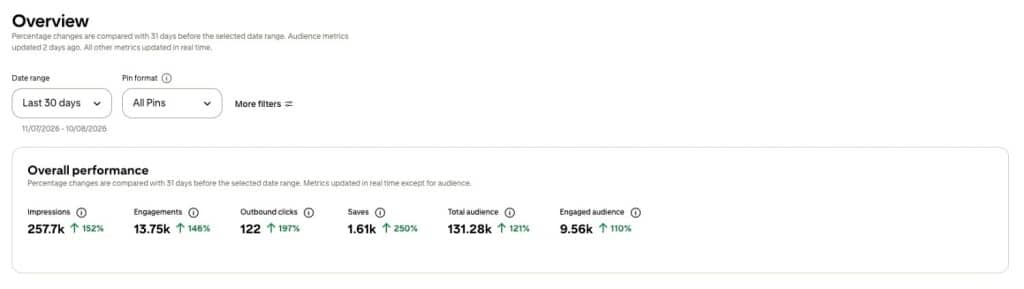
K-pop specific tips: Create vertical pins (1000x1500px) for each article. Use keywords in your pin titles and descriptions. Create boards organized by group. Pin consistently (aim for 10 to 15 pins per week across your boards).
X (Twitter)
X is where K-pop lives online. It’s the fastest platform for breaking news and fan discussions.
K-pop specific tips: Share new articles with relevant group hashtags. Engage with fan discussions (genuinely, not just to drop links). Quote tweet with your own take when news breaks. Build relationships with other fan accounts.
Instagram is great for building a visual brand and connecting with fans who prefer scrolling over reading.
K-pop specific tips: Share article snippets as carousel posts. Create Reels with K-pop content highlights. Use Instagram Stories for polls and questions (fans love voting for their favorites). Link your latest article in your bio or use a link-in-bio tool.
YouTube
If you’re comfortable with video, YouTube is a powerful companion to your blog. Many K-pop fans consume content through video first.
K-pop specific tips: Turn popular articles into video versions. Create ranking videos, comeback reaction content, or deep dives. Link back to your blog articles in video descriptions.
TikTok
Short-form K-pop content performs incredibly well on TikTok. Quick facts, “did you know” clips, and ranking snippets can drive traffic back to your blog.
K-pop specific tips: Keep videos under 60 seconds. Use trending sounds and K-pop-related hashtags. Add a CTA (call to action) pointing to your blog for the full article. Be consistent; post at least 3 to 4 times a week.
At Kpopbeen, social media promotion is an active part of our strategy, not an afterthought. We’re currently building out our social presence alongside our blog, because we know that relying only on Google is risky. (We learned that lesson the hard way with our previous site, Simplebeen, which lost significant traffic after a Google update.)
Our Honest Take on Blog Monetization
At Kpopbeen, we haven’t aggressively monetized yet. And that’s intentional.
Our focus right now is building Kpopbeen as a genuine brand first. We’re investing in quality content, building social media presence, and working on AI-optimized SEO before we worry about ad revenue. The logic is simple: a trusted brand with loyal readers will always monetize better than a site that puts ads everywhere before it’s earned its audience’s trust.
Our advice? Build first, monetize second. Get your first 50 articles published. Build consistent traffic. Earn your readers’ trust. Then explore monetization options that feel natural, not forced.
Common Mistakes New K-Pop Bloggers Make
We’ve made some of these mistakes ourselves. You don’t have to.
- Trying to cover everything. You’re not Allkpop. You don’t need to cover every debut, every scandal, every single piece of K-pop news. Focus on your niche and do it well.
- Copying news from other sites. Rewording Soompi articles is not content creation. It’s lazy, Google sees through it, and readers notice. Add your own reporting, analysis, or perspective.
- Publishing unverified information. One wrong fact can lose a reader forever. K-pop fans cross-check everything. If you’re not 100% sure about a stat or claim, verify it before publishing.
- Ignoring copyright. Using photos you don’t have rights to will eventually cause problems. Take the time to understand image licensing and create original visuals when possible.
- Chasing every trend without a strategy. Not every trending topic is worth covering. Ask yourself: does this fit my blog’s niche? Will this be relevant in a week? Is this something my audience actually cares about?
- Ignoring SEO. You can write the best article in the world, but if it’s not optimized for search, very few people will find it. Basic SEO is not hard to learn and it’s absolutely essential.
- Poor proofreading. Typos in idol names, wrong statistics, broken links. These small things add up and make your blog look unprofessional. This is exactly why tools like Grammarly exist.
- Inconsistent publishing. Publishing five articles one week and then disappearing for a month confuses your readers and signals to Google that your site isn’t reliable. Consistency matters.
- Over-relying on AI. This is a big one, and it’s a mistake we made ourselves in the early days. We tried to do everything manually and then swung too far the other way, wanting AI to do too much.
Here’s the balance we found: Use AI as an assistant, not a writer. Let it help with research, outlining, brainstorming, and editing. But the actual writing, the voice, the opinions, the fan perspective? That needs to come from you.
If you’re a fan, always ask yourself: “Would I actually want to read this if I landed on this page?” If the answer is yes, publish it. If you’re unsure, rework it.
Wrapping Up
Starting a K-pop blog in 2026 is absolutely worth it if you’re willing to put in the work.
The K-pop industry is worth billions and growing every year. Fans are constantly searching for profiles, reviews, guides, rankings, and news. There’s always room for a blog that does it well, with accuracy, personality, and genuine fan energy.
You don’t need to build the next Soompi overnight.
When we started Kpopbeen in October 2025, we had zero readers, zero articles, and zero traffic. Ten months later, we hit 298K clicks and 35.8 million impressions. Not because we had some secret formula, but because we focused on a clear niche, published accurate and useful content, developed a consistent workflow, and gradually built our audience.
That’s it. That’s the strategy.
Start with a focused niche. Use free tools to find topics fans are actually searching for. Write content that’s better than what’s already out there. Be accurate. Be consistent. Be patient.
And most importantly? Write like a fan. Because that’s what your readers are, and that’s what they want to read.
Good luck with your K-pop blog. The fandom needs more voices. Yours might be the next one people trust.
Frequently Asked Questions
You can start for as little as $3 to $5 per month with a hosting plan from Hostinger plus a free WordPress theme like Astra. Your domain will cost about $10 to $15 per year. So realistically, you’re looking at under $50 for your first year.
Technically, yes. You can use free platforms like WordPress.com or Blogger. But free blogs come with limitations: no custom domain, limited design options, restricted monetization, and less control over SEO. If you’re serious about growing, investing in self-hosted WordPress is worth it.
It depends on your niche, content quality, and SEO efforts. At Kpopbeen, we started seeing consistent organic traffic within 2 to 3 months. But it takes patience. Don’t expect thousands of visitors in your first week.
Not necessarily. Most K-pop information is available in English through official channels, fan translations, and English-language publications. Knowing Korean helps, but it’s not a requirement.
Idol and group profiles. They’re evergreen (people search for them year-round), relatively straightforward to write, and they establish your blog as a reliable K-pop resource.
Be careful with this. Official press photos released by agencies are generally safer for editorial use. Avoid taking photos from fan sites or other blogs without permission. When in doubt, create your own graphics or use officially released images and credit the source.
For beginners, 2 to 3 well-researched articles per week is a good target. Consistency matters more than volume. Publishing one great article per week is better than five rushed ones.