
Generally, trainees spend 2 to 4 years in the system. Some, like Twice’s Jihyo or Blackpink’s Jennie, train for upwards of six to nine years.
During this period, their entire existence is narrowed down to four core pillars: intensive vocal/rap training, precision dance classes, foreign language acquisition (primarily Korean, Japanese, and English), and media relations training.
Survival shows offer a dramatized glimpse into this world. However, the day-to-day reality of a trainee is far more structured, mentally grueling, and financially complex than what is shown on screen.
Below is an unfiltered look into what it actually takes to survive the climb from a hopeful auditionee to a debuted idol.
At a Glance: K-pop Trainee Reality (Summary Table)
For those looking for a quick breakdown, here is how the typical trainee experience shapes up across the industry’s standard parameters:
| Average Daily Hours | 12–15 hours (combining school and agency practice) |
| Typical Contract Length | 2–7 years (strictly pre-debut training contracts) |
| Financial Cost | “Trainee Debt” accumulated for lessons, housing, and food (often waived by Big 4 agencies) |
| Major Restrictions | Severe dieting, dating bans, social media bans, and restricted family contact |
| Success Rate | Less than 10% of signed trainees ever make it to a debut lineup |
Let’s get into more detail now.
What Is The Daily Life Of A K-Pop Trainee?
The sheer volume of work expected from trainees is immense. The average person treats school or a job as a 40-hour weekly commitment. A K-pop trainee’s week easily exceeds 80 to 90 hours of physical and mental labor.
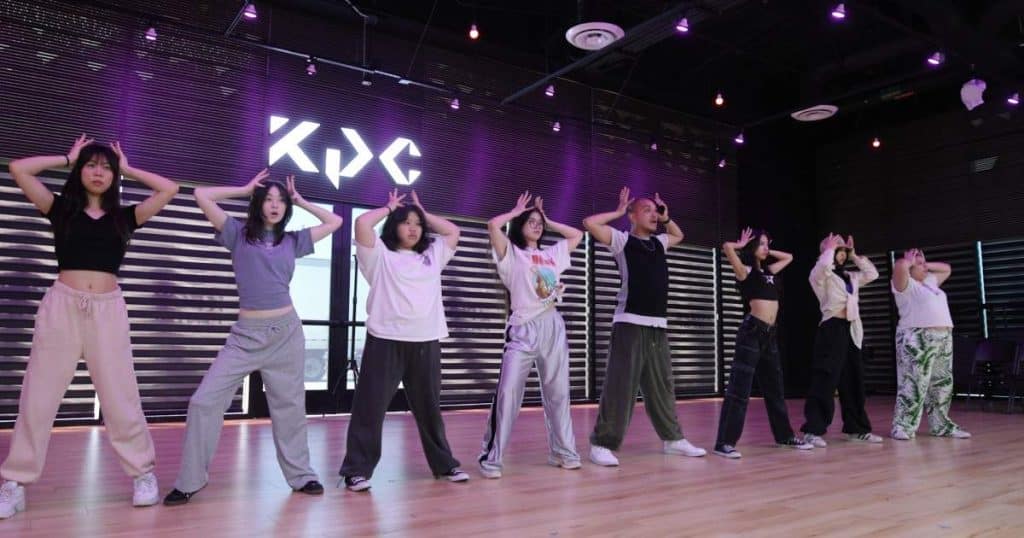
For school-aged trainees, the day is split between formal education and intensive training. A typical daily schedule for a mid-tier to major agency trainee looks like this:
- 07:30 AM – 08:30 AM: Wake up and commute to school.
- 09:00 AM – 03:00 PM: Academic classes (many trainees attend arts-focused high schools like SOPA or Hanlim, which are highly accommodating of entertainment schedules).
- 03:30 PM: Commute directly to the agency headquarters.
- 04:00 PM – 06:00 PM: Personal warmup, stretching, and basic physical conditioning.
- 06:00 PM – 07:00 PM: Dinner break (heavily monitored depending on active weight management rules).
- 07:00 PM – 09:00 PM: Choreography and synchronization class. Trainees practice dancing in perfect unison until movements become muscle memory.
- 09:00 PM – 11:00 PM: Individual vocal, rap, or language lessons (Japanese, Chinese, or English to prepare for global markets).
- 11:00 PM – 01:00 AM: Individual practice, recording reviews, or mandatory gym/fitness training.
- 01:30 AM: Commute back to the dorms, sleep, and repeat.
During school vacations or for trainees who have completed high school, this schedule simply expands. The morning academic block is replaced with extra hours in the practice room, meaning physical training can easily stretch up to 15 hours a day.
How Much Does K-Pop Training Cost?
How do teenagers afford elite-tier vocal coaches, foreign language tutors, dorms in expensive Seoul districts, and professional choreographers? The answer lies in the K-pop Investment Model, commonly known as “trainee debt.”
When an agency signs a trainee, they do not pay out-of-pocket for their training. Instead, the company acts like a venture capitalist, investing hundreds of thousands of dollars into each individual. Every vocal lesson, meal, and portion of rent is logged on a balance sheet as a deferred debt.
Once a trainee debuts, all revenue generated by the group (from album sales, streaming, merchandise, and concerts) is split between the agency and the artist based on a pre-negotiated percentage.
Crucially, in traditional mid-to-small tier agencies, the artist’s share of the profit is first used to pay off their accumulated trainee debt. Until that balance sheet hits zero, the idol does not receive a personal paycheck.
This explains why members of successful mid-tier groups often reveal they didn’t receive their first payout until two or three years after their debut.
Strict Rules And “Slave Contracts”
The term “slave contract” historically referred to the highly restrictive, decade-long exclusive agreements common during the first and second generations of K-pop.
While the Fair Trade Commission (FTC) stepped in to enforce the “7-Year Rule” (capping active idol contracts to a maximum of seven years), trainee life remains governed by incredibly strict behavioral guidelines.
Dieting and Constant Weigh-Ins
Body image pressure in the K-pop industry is intense. Many agencies enforce strict target weights based on height, often pushing trainees to dangerous extremes.
Weekly and sometimes daily weigh-ins are standard practice. Trainees who fail to meet their target weight can be barred from dance classes or have their food intake restricted.
Dating Bans
Dating bans are standard in pre-debut and early-career contracts. Agencies view dating as both a distraction from grueling schedules and a massive risk to a group’s marketability.
Fandoms expect a level of emotional availability from their idols, and a pre-debut dating rumor can kill a trainee’s career before it even begins.
Privacy and Isolation
Upon entering a dorm, many trainees must surrender their personal smartphones, receiving them back only during holidays or scheduled family calls.
This is designed to prevent leaks, social media mishaps, and unauthorized contact with the outside world. Communication is heavily filtered through managers.
How Do K-Pop Trainees Get Cut?
Getting signed to an agency is only the beginning. The real hurdle is staying there. Every month, trainees must participate in “Monthly Evaluations.” This is a high-stress showcase where they perform in front of executives, trainers, and the label’s founder.
During these evaluations, trainees are graded on their vocals, dance, facial expressions, and overall star quality. The results are made public within the agency, ranking the trainees from first to last.
The psychological pressure is immense. It creates an environment where your roommates in the dorms are simultaneously your closest friends and your direct competitors for a limited number of spots in the next debut group.
If a trainee underperforms for two or three consecutive evaluations, their contract is swiftly terminated, and they are sent home with no warning.
The Mental and Physical Health Reality
The combination of extreme physical exertion, sleep deprivation, and psychological pressure takes a severe toll on trainees.
Dance injuries, particularly chronic knee and ankle issues, are very common. Because taking time off to heal is seen as a sign of weakness or a lack of dedication, many trainees choose to perform through the pain.
The isolation from family, combined with the constant fear of failure, leads to high rates of anxiety, depression, and body dysmorphia among young trainees. In the past, seeking help was heavily stigmatized, and smaller agencies rarely offered psychological support.
Fortunately, the 2026 Standard Contract Reforms have legally mandated that agencies prioritize trainee mental health. Labels are now legally required to provide access to professional, licensed counseling and psychiatric care.
Additionally, under these rules, agencies are strictly prohibited from forcing minor trainees to skip school or drop out of academic institutions.
Conclusion: Is the K-pop Trainee Life Worth It?
The K-pop trainee system is a high-risk, high-reward gauntlet. For the select few who debut and achieve global stardom, the grueling years of sacrifice lead to a level of fame and financial success that most teenagers can only dream of.
However, the reality remains that the majority of trainees will never stand under the stage lights. It is a system built on intense competition, physical exhaustion, and emotional endurance.
FAQs
Most younger trainees attend regular classes during the morning and afternoon before heading to their agency for evening practice.
You can quit, but the financial consequences depend entirely on your contract. Those who unilaterally break their contract without mutual agreement may be legally required to pay back.
K-pop trainees do not receive a salary. Instead, the agency covers their essential expenses (lessons, accommodation, and food) as an investment.
While there is no official age limit, most agencies heavily prefer to scout and sign talent between the ages of 12 and 18.
Trainees who are cut or choose to leave before debut typically have their pre-debut contracts terminated. Many attempt to audition for other agencies to try again, while others transition into backup dancing, choreography, or return to a conventional lifestyle to focus on their education.