The creator economy is growing rapidly, rising from $104.2 billion in 2022 to an estimated $252.33 billion in 2025.
More people are turning their creativity into income by using platforms like YouTube, TikTok, and email newsletters to connect directly with audiences worldwide.
In this article, we explore key trends, leading platforms, and emerging opportunities shaping the creator landscape, including the global influence of K-Pop, which continues to drive engagement and cultural impact worldwide.
Creator Economy Statistics: Top Picks
- The creator economy grew from $104.2 billion in 2022 to an estimated $252.33 billion in 2025.
- 27% of creators say email newsletters drive the best engagement, followed by Instagram and Facebook.
- Women creators lead content creation, making up 65% of the global creator base.
- YouTube remains the top revenue source at 28.6%, while TikTok grows quickly to 18.3%.
- K-Pop fans spend an average of $4.5/month, fueling albums, concerts, and merchandise.
- AI adoption doubled from 34% in 2022 to 66% in 2023, helping creators work smarter.
Creator Economy Market Size and Projection
The creator economy grew steadily from $104.2 billion in 2022 to $127.65 billion in 2023. This rise shows more people creating content and earning money from it.
The growth was even faster in 2024, reaching $205.25 billion. As of 2025, the projected number is around 252.33 billion.
The table below shows an estimated market size growth till 2033:
| Metric | Value |
|---|---|
| Forecast Period | 2025–2033 |
| Global Market Size (est.) | $1,345.54 billion |
| Expected CAGR | 23.3% |
Source: Grand View Research, Global News Wire, Coherent Market Insights, ScienceDirect
Creator Economy Demographics
The creator economy spans regions, countries, and genders, showing how diverse creators drive global growth and engagement.
Creator Economy Market by Region
North America drives the creator economy, generating about $34 billion in 2025 and capturing roughly 34.2% of the global market.
Europe makes about $33 billion, nearly 26% of the market. More creators are reaching bigger audiences and earning more.
Asia-Pacific accounts for $26.16 billion, or close to 21% of the total. Growing use of digital platforms is helping the market expand steadily.
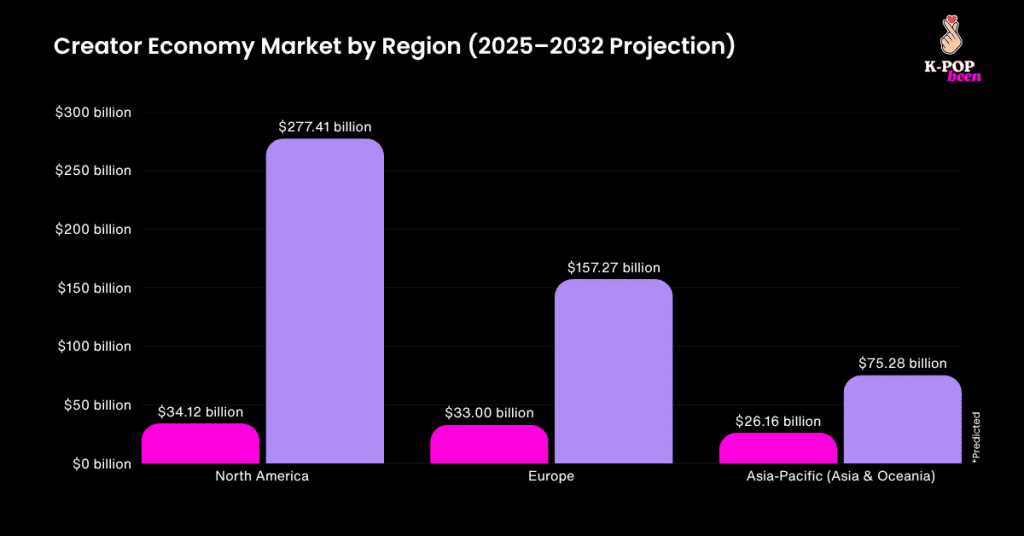
The table below shows the estimated value and CAGR of each region till 2032:
| Region | Market Size (2025) | Projected Value (2032) | Projected CAGR (2032) |
|---|---|---|---|
| North America | $34.12 billion | $277.41 billion | 34.9% |
| Europe | $32.84 billion | $157.27 billion | 25.1% |
| Asia-Pacific (Asia & Oceania) | $26.16 billion | $75.28 billion | 16.3% |
Source: Coherent Market Insights, Coherent Market Insights 2, Coherent Market Insights 3
Creator Economy Market by Country
China and India lead the global creator economy, showing the fastest market growth. Other countries are also contributing to growth, supported by active creators and expanding brand partnerships.
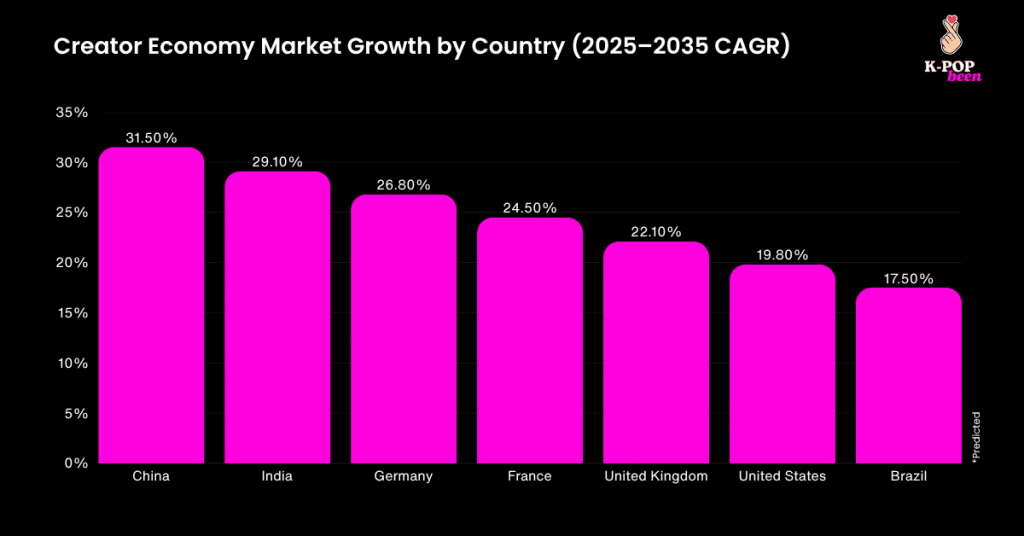
The table below summarizes the projected growth rates (CAGR 2025–2035) for key countries in the creator economy:
| Country | Growth Rate (CAGR 2025–2035) |
|---|---|
| China | 31.5% |
| India | 29.1% |
| Germany | 26.8% |
| France | 24.5% |
| United Kingdom | 22.1% |
| United States | 19.8% |
| Brazil | 17.5% |
Source: Future Market Insights
Creator Economy Market by Gender
The creator economy includes people of all genders, with women leading 65% of content creation and shaping how creators earn money on digital platforms.
Men also make a big contribution, creating different types of content and connecting with audiences around the world. A smaller group identifies as non-binary or other, adding fresh ideas.
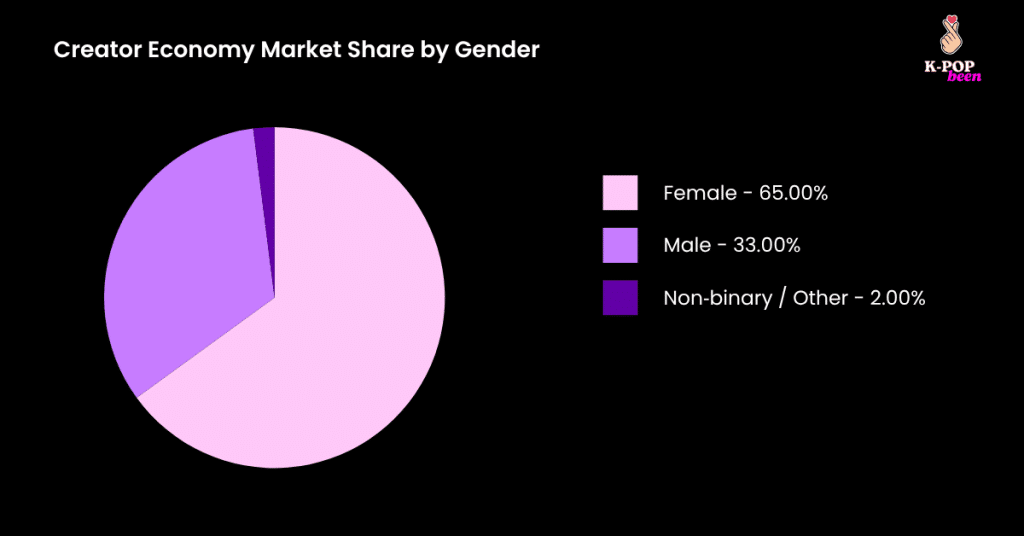
The table below shows the estimated gender distribution of creators:
| Gender | Estimated Percentage of Creators |
|---|---|
| Female | 65% |
| Male | 33% |
| Non‑binary / Other | 2% |
Source: ConvertKit Report
Creator Income & Monetization Stats
Creator income and monetization vary widely, showing how different methods help build earnings in the creator economy.
Let’s look at how creators earn and the methods they use to monetize their content.
Creator Income Distribution
The creator economy includes a wide range of earnings. Most creators, over 50%, earn less than $10,000 a year, often using content creation as a side activity or a way to explore new opportunities.
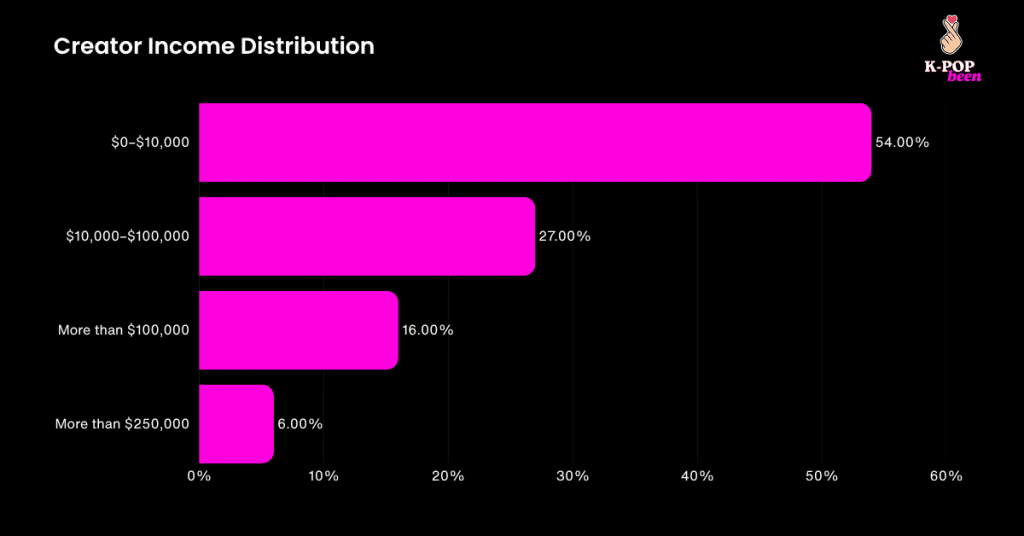
The table below shows the detailed income distribution among creators:
| Annual Income | % of Creators |
|---|---|
| $0–$10,000 | 54% |
| $10,000–$100,000 | 27% |
| More than $100,000 | 16% |
| More than $250,000 | 6% |
Source: ConvertKit Report
Key Monetization Methods Used by Creators
Many creators earn through digital products, with about 24% using them to generate income. Advertising and affiliate marketing support roughly 10–11% of creators, helping them reach wider audiences while monetizing content.
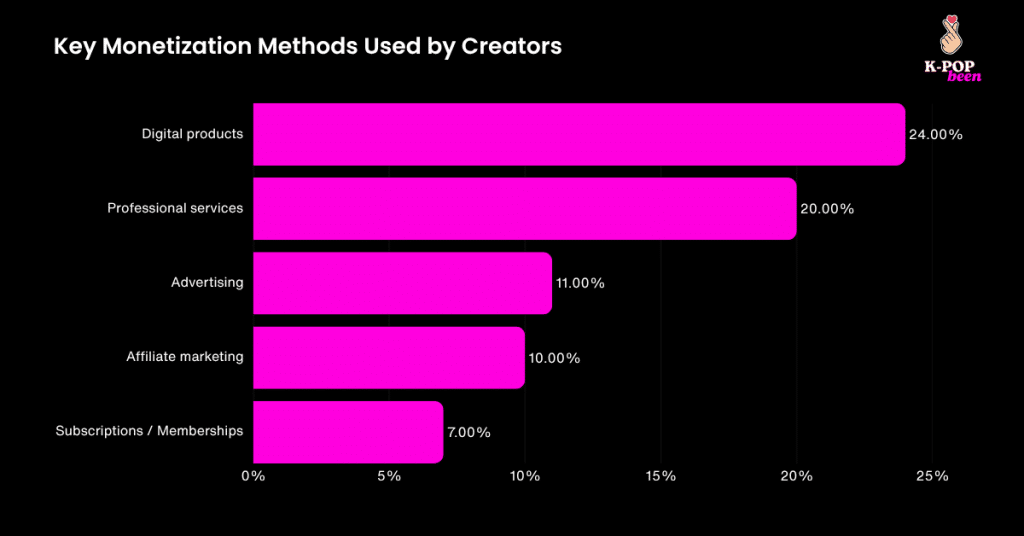
A smaller share relies on subscriptions or memberships for steady earnings. The table below shows the main monetization methods used by creators to earn money:
| Monetization Method | % of Creators Using |
|---|---|
| Digital products | 24% |
| Professional services | 20% |
| Advertising | 11% |
| Affiliate marketing | 10% |
| Subscriptions / Memberships | 7% |
Source: ConvertKit Report
Creator Economy by Platform & Content Type
The platforms creators use and the content they provide play a huge role in building audiences, driving engagement, and shaping the creator economy. Let’s dive in to understand.
Platforms for Audience Engagement
In 2024, creators find email newsletters the most powerful way to connect, with 27% saying it works best. It lets them reach people directly and build real relationships.
Instagram and Facebook are next, with 15% and 12% of creators choosing them for engagement. Smaller platforms like blogs, YouTube, and community spaces still matter, especially for building trust over time.
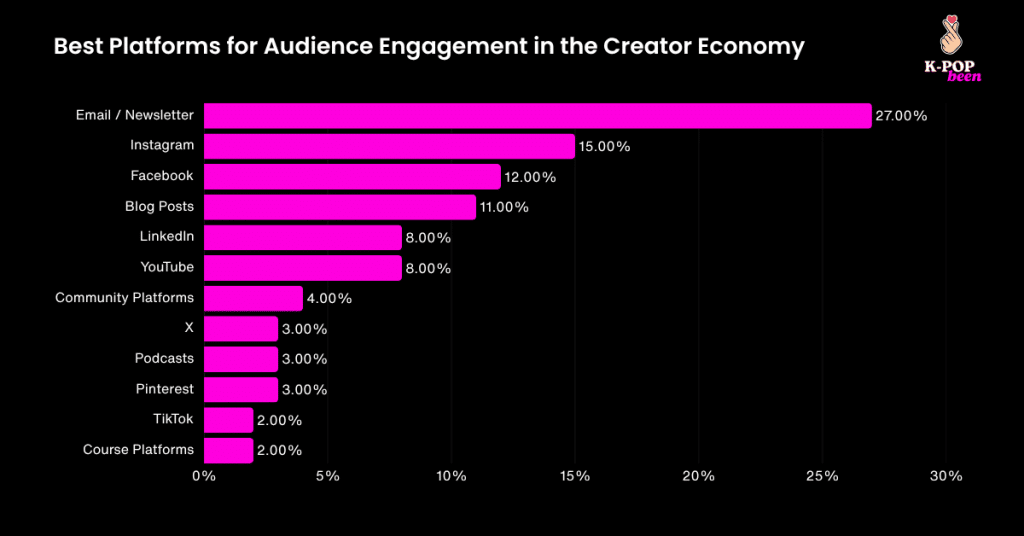
Using a mix of channels helps creators reach more people while keeping their audience close. The table below shows the platform engagement based on creators’ experience:
| Platform / Channel | % of Creators Who Say It’s Best for Engagement |
|---|---|
| Email / Newsletter | 27% |
| 15% | |
| 12% | |
| Blog Posts | 11% |
| 8% | |
| YouTube | 8% |
| Community Platforms | 4% |
| X | 3% |
| Podcasts | 3% |
| 3% | |
| TikTok | 2% |
| Course Platforms | 2% |
Source: ConvertKit Report
Creator Economy Market: Key Players
YouTube remains the top income source for many creators, with nearly 29% relying on it as their main source of revenue. TikTok follows, supporting about 18% of creators, especially those producing short-form video content.
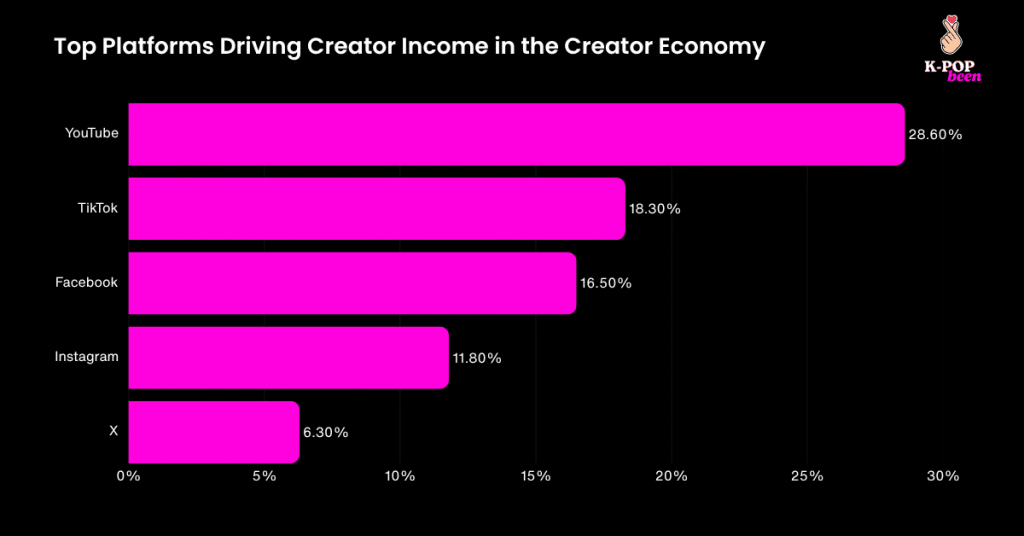
Other platforms like Facebook, Instagram, and X give creators more ways to earn and connect with larger audiences. The table below shows the key players:
| Platform | % of Creators for Whom It’s the Top Income Source |
|---|---|
| YouTube | 28.6% |
| TikTok | 18.3% |
| 16.5% | |
| 11.8% | |
| X | 6.3% |
Source: Epidemic Sound
K-Pop Creator Economy Statistics
Let’s look at how K-Pop drives the creator economy through fan spending, social media, concerts, and merchandise.
K-Pop Creator Economy Overview
K-Pop and South Korea’s creative content helped generate about $12.4 billion in export revenue in 2021, a number that outpaced earnings from many traditional goods. Its creative sectors grow steadily and employ more than 600,000 people.
Source: UNCTAD
Top K-pop groups like BTS and Blackpink have had a significant economic impact, with concerts and global fan spending contributing several billion won per event and boosting tourism from around the world.
Source: Research Gate
This blend of music, digital platforms, and cultural exports shows how creative content can drive income, jobs, and global engagement far beyond Korea’s borders.
Source: UNCTAD
K-Pop Fan Economy and Fan Spending Stats
K‑Pop fans worldwide spent an average of $4.5 per month on music, K-pop concerts, and content in 2023, down from $7 in 2022, showing steady growth in global fan engagement.
Fans in the UAE led the way at $17.6 per month, highlighting regional spending differences.
Source: Statista
Collecting physical albums drives extra purchases. Top releases like SEVENTEEN’s “SPILL THE FEELS” had 7 versions, while ITZY’s albums average 7.5 versions, with each costing around $10. Fans often buy multiple copies to collect photocards and extras.
High fan spending fuels concerts, streaming, and merchandise, creating millions in revenue per album. First-day sales of ITZY’s “KILL MY DOUBT” exceeded 318,300 copies, showing how fan culture directly powers the K‑Pop economy.
Source: Research Gate
K-Pop Social Media Engagement Statistics
K‑Pop creators generated massive social media engagement in 2023, reaching 25 million fan club members globally.
YouTube, Instagram, and TikTok drove an average engagement rate of 3.5 % per post, showing strong creator influence on fan interaction.
About 70 % of fans discover K‑Pop content via social media, highlighting the role of digital creators in growing global fandom and monetizing content through ads and sponsorships.
The U.S. K‑Pop creator economy expanded by 25 % from 2022 to 2023, demonstrating rising international opportunities for monetization, merchandise sales, and paid subscriptions.
Source: Zipdo
AI Adoption in the Creator Economy
The use of AI in the creator economy is growing rapidly, doubling from 2022 to 2023. This growth highlights how AI helps creators work smarter and reach more people.
Among those using AI, marketers, YouTubers, entrepreneurs, and bloggers account for about 70% of creators who use various AI tools.
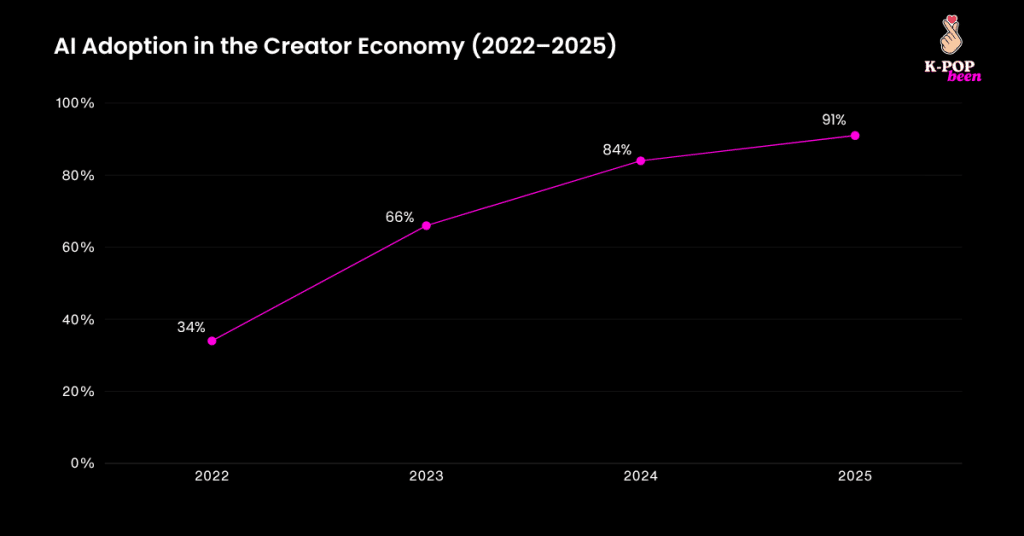
The table below highlights the AI adoption among creators from 2022-2025:
| Year | % of Creators Using AI for Content Creation |
|---|---|
| 2022 | 34% |
| 2023 | 66% |
| 2024 | 84% |
| 2025 | 91% |
Source: ConvertKit Report, Epidemic Sound
Creator Economy Challenges
Creators face several practical challenges as they grow their audience, manage their work, and try to build a stable income in the creator economy.
Some of the challenges the creators face are as follows:
- Many creators struggle to balance creating content they enjoy with earning money without losing creativity or audience trust.
- Marketing a service or product feels hard when creators lack time, a clear strategy, or the skills to promote themselves consistently.
- Creators often find it difficult to know what audiences are truly willing to pay for and at what price point.
- Managing time becomes a challenge as creators juggle content creation, engagement, marketing, and personal responsibilities every day.
- A lack of recurring revenue creates income uncertainty, making it harder for creators to plan long-term and stay financially stable.
Future of Creator Economy
The creator economy is expected to grow stronger in the coming years, shaped by changing work preferences, new tools, and evolving income models.
- More creators plan to earn higher income by adding new revenue streams beyond ads and sponsorships.
- A growing number of creators aim to work full-time, moving away from traditional salaried jobs.
- AI will play a bigger role in content creation, helping creators save time and improve quality.
- Audience relationships will become more important, with creators focusing on direct and loyal connections.
- Platforms will keep building tools to help creators make a steady income and feel secure.
Source: ConvertKit Report