
The first K-pop group is Seo Taiji and Boys, who debuted in 1992. They changed Korean music by mixing rap, rock, and hip-hop with Korean lyrics.
But if you ask about the first idol group, that’s H.O.T. in 1996. They created the trainee system, matching outfits, and fan clubs we see today.
The confusion happens because these groups started two different things. Seo Taiji and Boys changed the music itself, and H.O.T. built the idol industry. Both matter, but they’re not the same kind of “first.”
Let’s see how each group shaped K-pop as it became.
Which Is the First K-Pop Group in History?
Seo Taiji and Boys debuted on April 11, 1992, on the MBC Talent Show. Judges gave them low scores, but teenagers loved them immediately.
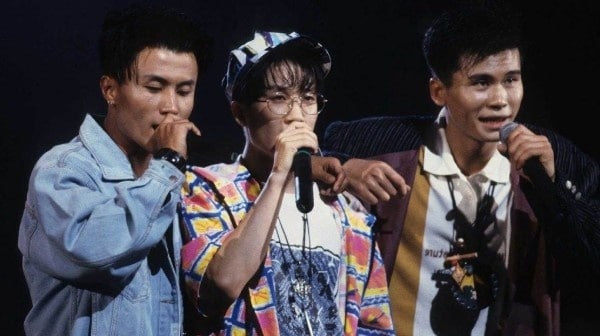
Their success marked the beginning of the 1st-generation K-pop groups, which introduced organized fandoms, choreography, and the early idol system.
First K-Pop Group Explained
K-pop’s birth occurred in two stages: the music revolution came first, and then the business model followed.
1. Seo Taiji and Boys – The First K-Pop Group (Musical Pioneer)
Three guys showed up on TV in 1992 and shook up Korean music. That’s the simple version.
- Debut: April 11, 1992, on MBC’s Saturday talent show.
- Music style: Rap, rock, techno, and hip-hop mixed together.
- Key songs: “Nan Arayo” (I Know), “Hayeoga” (Come Back), “Regret of the Times.”
- Work & impact: They wrote songs about school pressure and social issues when other artists sang about love.
- Achievements: Their first album sold over 1.6 million copies, and they changed what could be played on Korean radio.
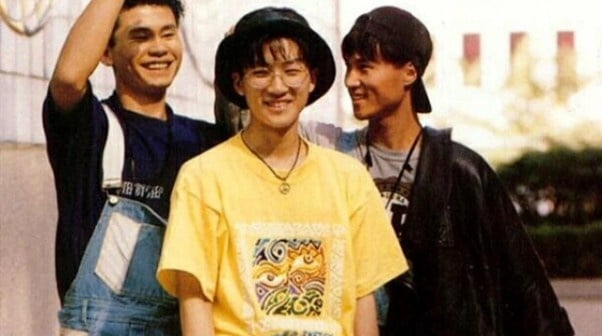
Every generation has that one band everyone remembers. For Koreans born in the 1970s and 1980s, it was Seo Taiji and Boys.
2. H.O.T – The First K-Pop Idol Group
Lee Soo-man watched how American boy bands worked and created something similar in Korea. He founded SM Entertainment and built the first real idol group.
- Debut: September 7, 1996, with the song “Descendants of Warriors.”
- Music style: Fast dance-pop with hip-hop elements and perfect choreography.
- Key songs: “Candy,” “We Are The Future,” “Hope.”
- Idol system: SM picked five teenage boys through auditions, trained them for months, gave them specific roles (leader, rapper, dancer, visual, youngest), and dressed them in matching clothes.
- Achievements: They created Club H.O.T., Korea’s first official fan club with membership cards, colors (white), and organized cheering.
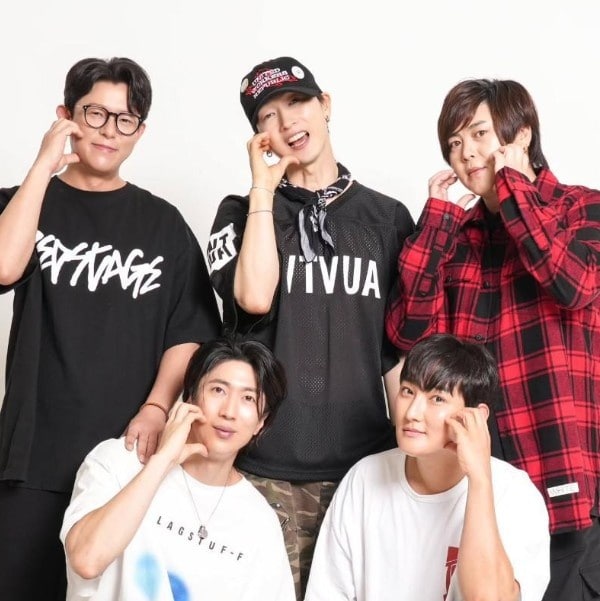
H.O.T. didn’t just make music. They sold a complete package: personality, looks, dance, and a relationship with fans. Think of them as the blueprint for every boy group you stan today.
First K-Pop Groups by Category
As idol groups became profitable, companies raced to create the next big group. Here’s who started what:
| Category | First K-Pop Group | Company |
|---|---|---|
| First Idol Boy Group | H.O.T | SM Entertainment |
| First Idol Girl Group | S.E.S | SM Entertainment |
| First YG Group | Seo Taiji and Boys | Bando Records |
| First Coachella K-Pop Group | BLACKPINK | YG Entertainment |
| First BigHit Group | 2AM | Big Hit Entertainment |
Each group opened a new door. Someone had to be first, and these groups took the risk.
How K-Pop Evolved from 1992 to Today
After Seo Taiji and Boys proved that teenagers would buy Korean music that sounded modern, companies jumped in fast.
- SM Entertainment, YG Entertainment, and JYP Entertainment started training kids to become idols. They taught them singing, dancing, languages, and even how to act on camera.
- Solo singers and rock bands became less popular. Groups with concepts and choreography took over.
- These three companies ran K-pop until HYBE (formerly Big Hit Entertainment) created BTS in 2013. By 2020, BTS and BLACKPINK weren’t just famous in Korea. They were selling out stadiums in America, Europe, and Asia.
Seo Taiji started with three guys and a dream. Now K-pop is a global business worth billions.
K-Pop in 2026: Today’s Groups and Global Reach
K-pop in 2026 is truly worldwide. Fourth and fifth-generation groups like NewJeans, Stray Kids, and RIIZE dominate charts across continents. Groups now release songs in multiple languages and tour globally.
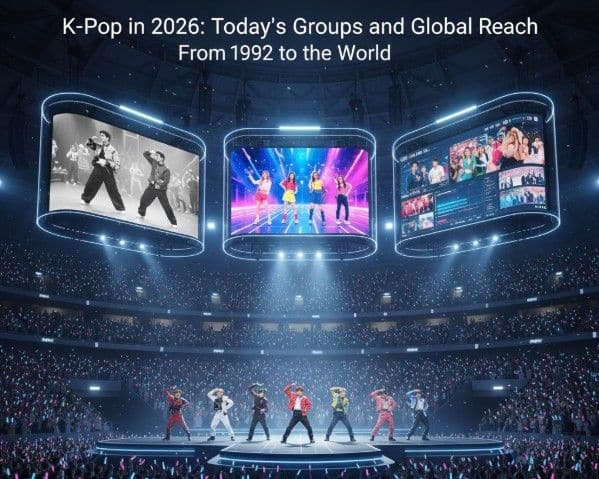
Generations of K-Pop keep evolving, but the training system and fan connection remain strong. The groups today are more international than ever, but they all trace back to what Seo Taiji and Boys started in 1992.
Also Read:
Conclusion: Seo Taiji and Boys is the first K-pop group
Seo Taiji and Boys created the music side in 1992, while H.O.T. built the idol system in 1996. Seo Taiji proved Korean youth wanted music that spoke to them. H.O.T. proved you could train, package, and sell that music as a lifestyle.
Every group you follow now exists because these pioneers took chances in the 1990s. They built something from nothing.
Today’s global scene, the sold-out tours, the Billboard hits, the fan chants at 3 AM – it all connects back to these 1st Gen groups.
FAQs
Seo Taiji and Boys debuted in 1992 and created modern K-pop music. H.O.T. launched in 1996 as the first idol group with a training system.
Lee Hi won K-pop Star season one in 2012. She beat Park Ji-min in the finals and signed with YG Entertainment after the show ended.
Shinhwa debuted in 1998 and is still performing together in 2026. They’re the longest-running group with all original members still active without breaking up.
H.O.T. is the first idol group to use trainees and fan clubs. But Seo Taiji and Boys made the first K-pop music four years earlier.
BLACKPINK performed at Coachella in 2019. They were the first K-pop act on the main stage and played for 60 minutes to massive crowds.